01
The documents.
An organized collection of the records we obtain, with sources and references so you can follow the evidence.
Deeds · liens · permits · tax recordsBay Area Property Research & Analysis
Comprehensive documentation.
Clear, factual analysis.
We gather available public records, connect the history, and flag questions to resolve before you buy.
Parcel 48H-7704-134APN 48H-7704-134$495One property. One-time fee.
Send your property details first. We confirm scope and availability before payment.

What you receive
The records behind the property, the findings that connect them, and the questions to take into your next conversation.
An organized collection of the records we obtain, with sources and references so you can follow the evidence.
Deeds · liens · permits · tax recordsA plain-language report connecting the history, comparing sources and flagging discrepancies and unanswered questions.
Timeline · findings · gaps in the recordsA prioritized checklist of what to clarify, with the agency, seller or appropriate professional to ask.
Specific questions · supporting referencesWhat we research
We search across the responsible county and city sources, then bring the available information into one organized review.
Records we look for: Deeds, legal descriptions and recorded ownership changes.
How you can use them: Follow how the property changed hands.
Records we look for: Mortgages, recorded claims, releases, easements and restrictions.
How you can use them: Identify claims to verify and documents that may affect your plans.
Records we look for: Available permits, inspection statuses, complaints and planning cases.
How you can use them: Compare advertised features with the agency’s history.
Records we look for: Published tax bills, assessments, foreclosure notices and sale status.
How you can use them: See the tax and sale information that needs reconfirming.
Records we look for: Parcel maps, published hazards, environmental records and available historical imagery.
How you can use them: Identify mapped conditions and changes worth clarifying.
A defined search, clearly documented. One residential parcel. A 10-year Recorder search. Up to 50 pages of recorded-document copies, with Recorder fees included. Search gaps and pending requests are identified.
Full checklistThe value of connecting the records
When sources disagree, your report shows what we found, what remains unconfirmed, and who to ask next.
Fictional example of a research findingNo permit establishing the third unit was located in the records searched.
Ask the building department to clarify the unit count and permit history before relying on the advertised three units.
Your property. Our research.
We handle the records work and organize what we find, so you can spend your time reviewing the property.
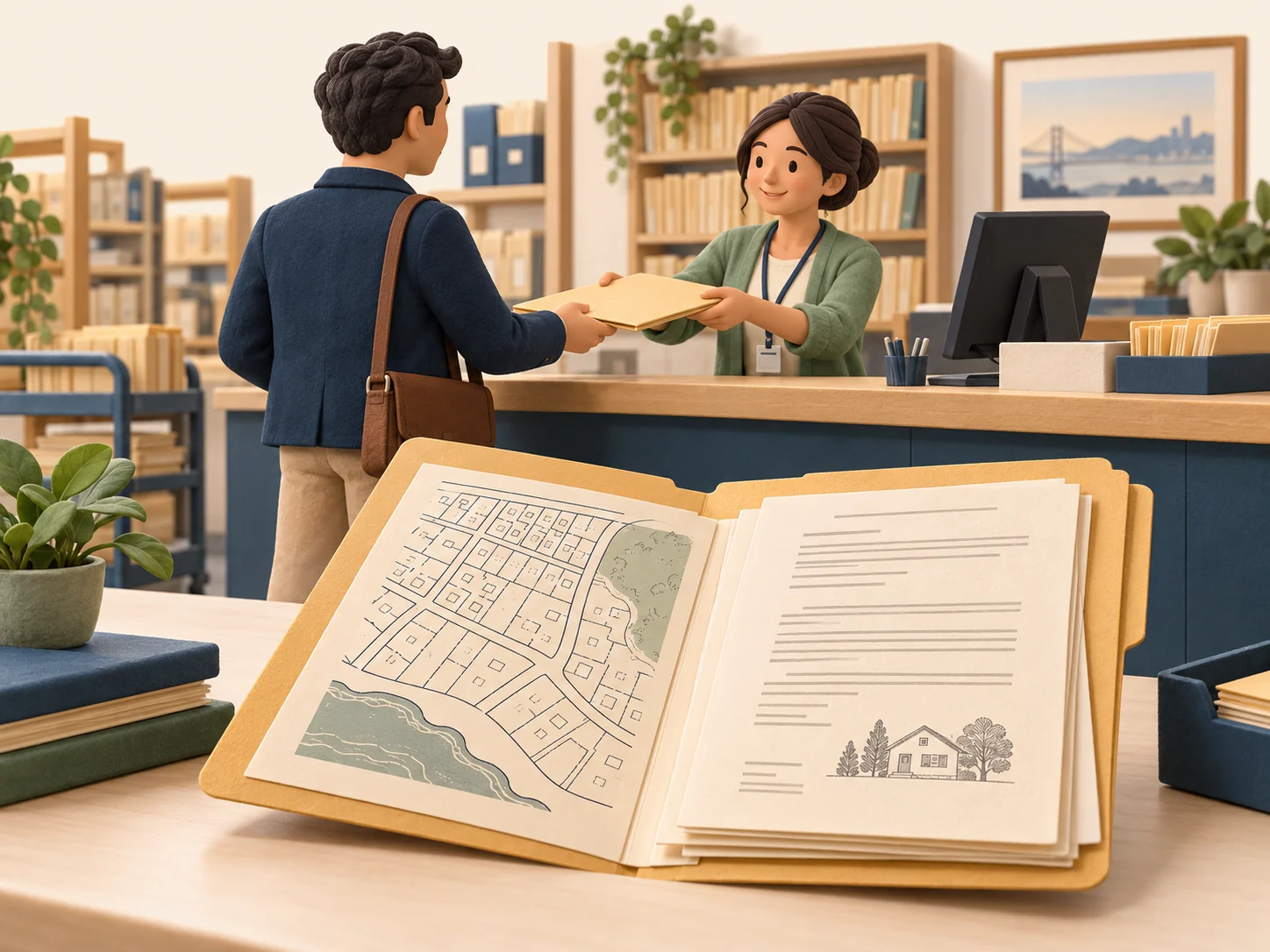
We search county and city sources, request missing files, and visit public offices when needed.

We compare documents, build the timeline, and flag discrepancies and unanswered questions.
An organized document folder, a plain-language report, and clear next steps. Pending agency requests are identified.
Research begins after the parcel, scope and payment are confirmed. Pending agency requests are listed in your initial report; received in-scope replies are added to your file.
For your next property
The documents, the analysis, and a practical next step—all focused on the property you’re considering.
After verified payment. Agency requests still pending are identified. Miss the initial-report deadline? Request a full refund.
Read the delivery guaranteeSend the parcel details first. We confirm scope and availability before payment. Additional costs require your agreement.
Scope & common questions
Review the full research checklist, report format and service terms.
Read the full scope & termsAddress and APN cross-check, assessor parcel map and available assessor facts such as use, lot size, building size and year built.
How to use it: Compare the listing with the county’s property description and confirm that the documents refer to the parcel you intend to buy.
Latest located ownership deed, names of the recorded grantees, how ownership is described and the deed’s legal description.
How to use it: See the recorded ownership and property interest described in the deed. Use the legal description to compare it with the auction notice.
Located transfer deeds organized by date, with parties, recording numbers and document references, within the defined search period.
How to use it: Follow previous transfers, including located trustee or tax deeds, and identify changes or gaps that need an explanation.
Located deeds of trust, including borrower, beneficiary, original secured amount, recording date and document number where stated.
How to use it: Identify the loan documents affecting the recorded history and the loan referenced by a foreclosure notice. Original amounts are not current payoff balances.
Located assignments, modifications, substitutions of trustee and subordination agreements, linked to the original instrument where possible.
How to use it: Track recorded changes to the loan and trustee. Give your title company the related documents when asking about the current parties or lien priority.
Located full or partial reconveyances and lien releases, matched to the specific loan or recorded claim they reference where possible.
How to use it: See which filing a release covers and which located claims have no matching release in the search. Missing release evidence does not establish an unpaid balance.
Search for recorded tax liens, judgment abstracts, mechanics’ liens, municipal liens and HOA liens. Located claims list the claimant, stated amount when supplied, recording reference and matching-release result.
How to use it: Identify potentially outstanding recorded claims to investigate before buying. Use the document references to verify current balances and ask a title professional which interests may affect your purchase.
Located recorded easements, access agreements, covenants, conditions and restrictions (CC&Rs), and other deed restrictions within the search scope.
How to use it: Review documents that may affect access, use, additions or resale before committing to your plans.
Located notices of default, notices of trustee’s sale and recorded rescissions, linked to their referenced loan where possible and arranged by date.
How to use it: Follow the foreclosure proceeding and distinguish a rescinded foreclosure notice from a released loan.
A check of the responsible trustee or auction source for its latest published sale status and schedule, with the source and time checked. Unavailable information is identified.
How to use it: Compare the auction listing with the current published source and know which sale details to reconfirm before bidding.
Published secured and supplemental tax bills, reported delinquency, and itemized direct assessments and charges shown on the available bills.
How to use it: See reported unpaid taxes and recurring assessment charges to discuss when estimating acquisition and carrying costs.
Available public permit entries, work descriptions, permit dates, inspection results and final statuses from the responsible city or county. We identify older or missing files that require a targeted records request.
How to use it: Distinguish a permit being issued from a passed final inspection and identify documented work that needs clarification.
Available public complaints, code-enforcement cases, notices and reported case statuses for the parcel. Restricted, unavailable and pending records are identified.
How to use it: See what the agency records actually report, whether a case is shown as open or closed, and which questions to take to the responsible department.
Available public planning applications, decisions and approvals, cross-checked against assessor facts, building records and any listing information you provide.
How to use it: Spot differences in recorded units, use, size or project status without treating a missing record as proof that work is unlawful.
Published zoning, General Plan designations and historic overlays, with links to the responsible planning sources.
How to use it: Identify published rules to discuss with the planning department before pursuing an addition, conversion or redevelopment.
Official flood, fire, fault, liquefaction and earthquake-induced landslide maps, including sources, map dates and coverage gaps.
How to use it: Identify mapped conditions to raise with an insurer, inspector or other qualified professional before making a purchase decision.
Public GeoTracker and EnviroStor searches with links to located environmental-site records and the search area identified.
How to use it: Identify known cleanup-site records for further review and see which agency maintains the underlying information.
Available assessor parcel and location maps, historical maps and aerial imagery, with dates and sources. Images are included only where reproduction is permitted; otherwise we provide a source reference. Material coverage gaps are identified.
How to use it: Compare the documented property context across time and identify visible changes to ask about. These maps and images do not establish surveyed boundaries or physical condition.
Read the important findings first: recorded ownership, located claims, tax and permit information, conflicting records, gaps and prioritized questions to resolve.
Follow the dated ownership transfers, loan documents and foreclosure notices, with references to the supporting evidence.
For each located loan or claim, see the parties, recording reference, amount stated when available, matching-release result and recommended verification.
Check the document numbers, recording dates, source links, search dates and coverage limits behind the report.
Read selected deeds, loan documents, liens, releases or notices yourself and share them with your advisors. Recorder copy fees are included.
See which in-scope documents required a request, the responsible agency, request date and what is received, pending or unavailable. If no requests were needed, the report says so. Received in-scope records are added to your file, with a findings update where relevant.
Take specific questions and recording references to the trustee, Tax Collector, planning department, title company, attorney or inspector as appropriate.
Download the report and document bundle from your private order page and keep them together for your purchase review.
A 10-year recorder-index search through the latest index date available when checked, plus the latest located vesting deed and older instruments directly referenced in located records. One identified residential parcel per order.
We show located records, matching-release evidence, source gaps and pending requests. A claim without a located release may still require verification. Current balances, lien priority and interests surviving a sale require separate professional review.
Your initial report identifies pending agency requests. Received in-scope records are added to your file, with a findings update where relevant. Availability, source coverage and reproduction permissions can limit what we obtain; complete agency archives and building plans are not promised. If an essential deed or applicable foreclosure document cannot be retrieved, you may choose a full refund.
Illustrative format only. The example references below are fictional and describe no actual property.
Read the summary, then follow the record.
The report identifies the parcel, summarizes the recorded ownership and lists notable loan, lien, foreclosure and tax findings.
| Located record | What the report says | How to use it |
|---|---|---|
| Deed of trust Example DOT-A | No matching reconveyance located within the stated search. | Ask a title professional to verify the loan’s current status and effect on the purchase. |
| Reconveyance Example RELEASE-B | References a different loan, Example DOT-C. It is not matched to DOT-A. | Check the specific instrument released before assuming a separate loan was also released. |
A missing release does not establish an unpaid balance. Stated document amounts, published foreclosure debt and current payoff figures are kept separate.
Use the document register to open included copies or find retrieval references. The checklist pairs open questions with the responsible source or professional. The request log lists the agency, record requested, request date and status, or states that no requests were needed.
We show the recorded claim and whether a matching release was located. Current balances, lien priority and interests surviving a sale need separate verification.
Your initial report lists pending requests, search gaps and unavailable records. Received in-scope records are added to your file, with a findings update where relevant. If we cannot retrieve an essential deed or applicable foreclosure document, you may choose a full refund.
Yes. We search available public permit, inspection, complaint and planning records at the responsible city or county, and make targeted requests for missing in-scope records. A complete archive or copies of building plans are not promised.
Yes. Report a sourcing or transcription error within 30 days of delivery and we’ll correct it at no extra charge.
Public-record research and factual analysis within the stated search scope. Legal opinions, title insurance and physical inspections are not included.
Bay Area Property Research & Analysis